CO₂ Injection Guide
When you need it, how to set it up, and how to dial it in without killing your fish.
CO₂ injection transforms a planted tank from 'surviving' to 'thriving.' It's the single biggest upgrade you can make for plant growth, color, and density. But it requires understanding and respect — too much CO₂ suffocates fish.
Do You Need CO₂?
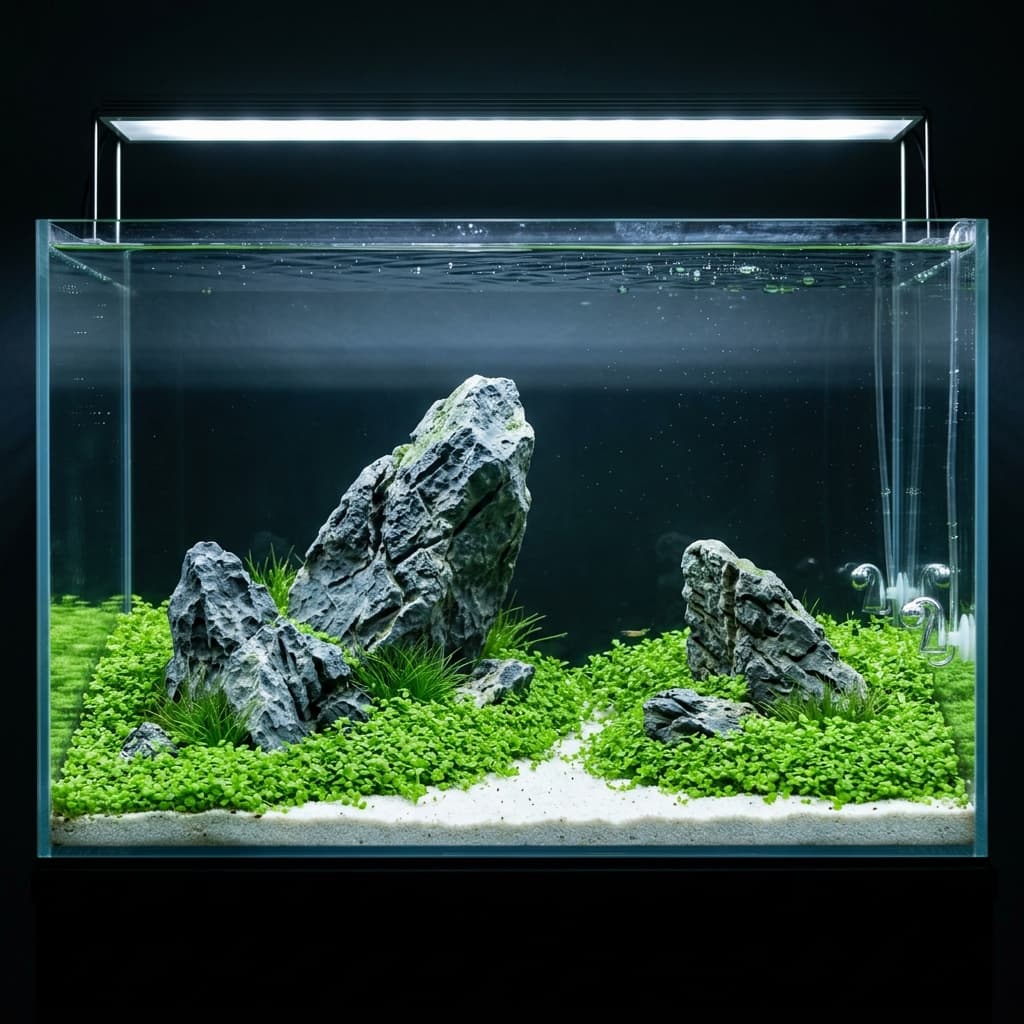
Low-tech plants (Anubias, Java Fern, Crypts) don't need it. High-demand carpet plants (HC Cuba, Glosso, Monte Carlo) absolutely do. Stem plants grow faster with CO₂ but can survive without. If you want a lush, densely planted tank with vibrant reds and carpets, CO₂ is non-negotiable.
Equipment You Need
A pressurized CO₂ system consists of: a CO₂ cylinder (5lb is the sweet spot for most tanks), a regulator with solenoid valve (so it shuts off at night), a bubble counter (to measure flow rate), and a diffuser (ceramic or inline). Skip DIY yeast setups — they're inconsistent and frustrating.
How to Dial It In
Target 30ppm CO₂ during the photoperiod. Use a drop checker with 4dKH reference solution — it should turn lime green at optimal levels. Yellow = too much (dangerous). Blue = too little. Start the CO₂ 1-2 hours before lights on and shut it off 1 hour before lights off. Monitor your fish — gasping at the surface means CO₂ is too high.
Safety
Always use a solenoid on a timer so CO₂ turns off at night (plants don't use CO₂ without light, and it builds to dangerous levels). Maintain at least 1-2 dKH buffer. Surface agitation helps off-gas excess CO₂ in emergencies. Start low and increase gradually — you can always add more, but you can't un-gas your fish.